After the first successful year of our Erasmus Accreditation, the second year (2024–2025) has been even richer in experiences, learning, and new partnerships. Here is a look back at how our year unfolded, step by step.
February–March 2025: Starting with learning mobilities
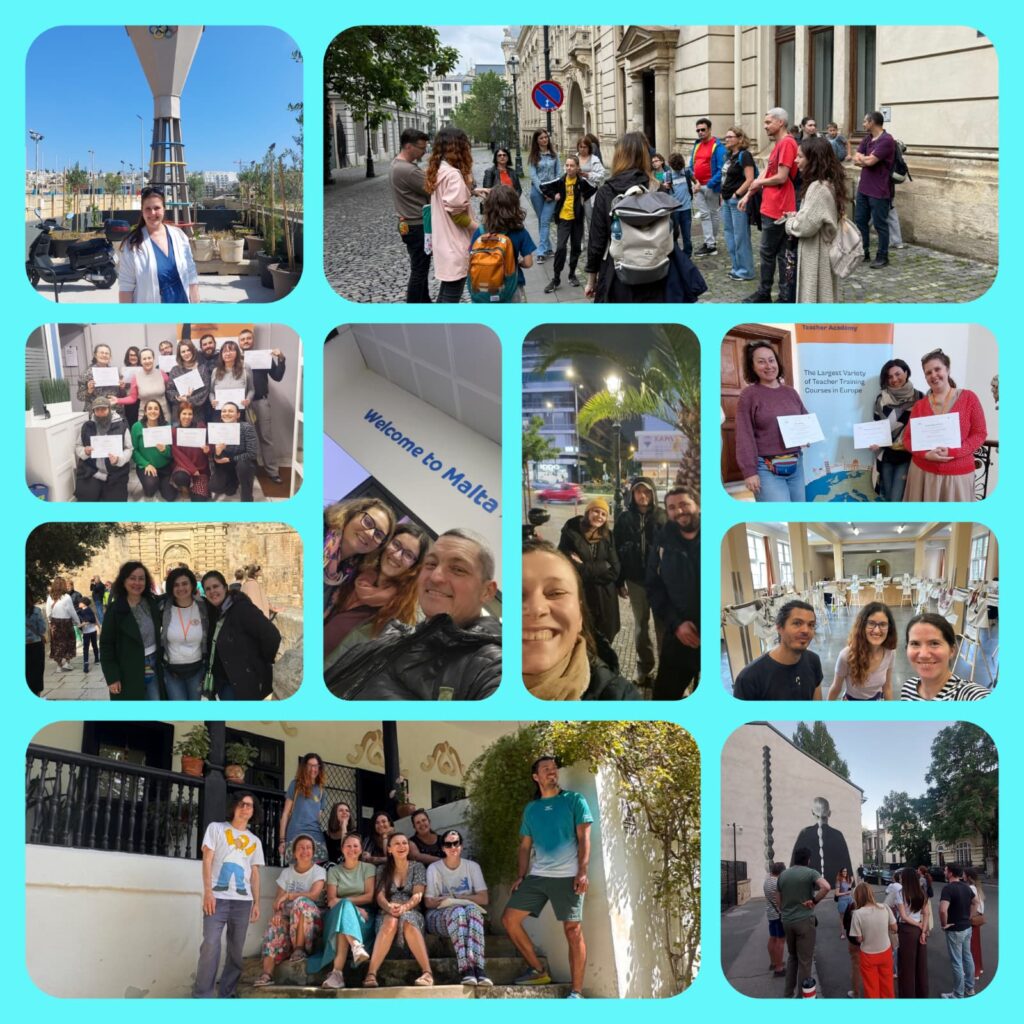
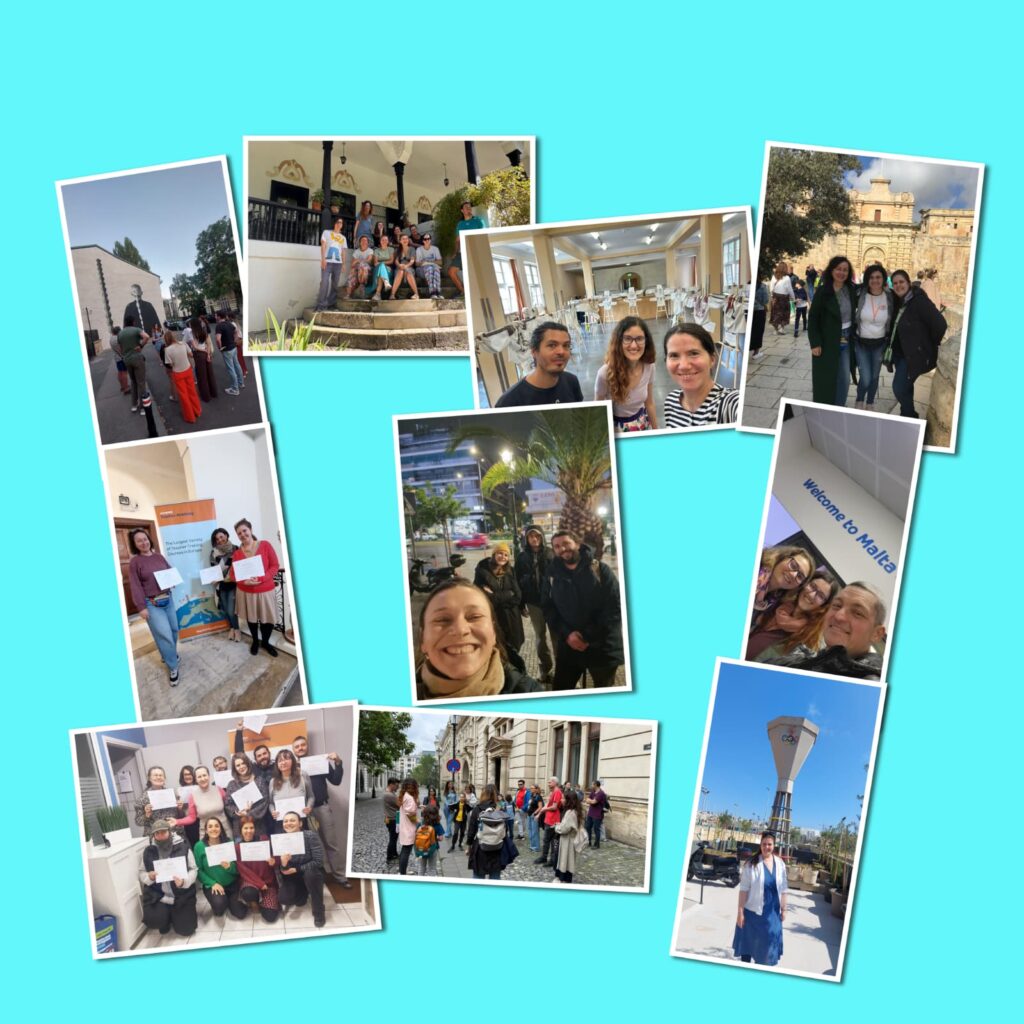
The year began with three learning mobilities. During February and beginning of March, three colleagues travelled to Malta for a six-day course on AI and other educational tools. Shortly after, four colleagues joined a course in Athens focused on heritage and digital instruments, combining cultural topics with new technology. At the same time, another three colleagues went to Malta for training on digital tools in education, organized by the Europass Teaching Academy.
These mobilities marked a turning point for our association, as colleagues returned inspired and ready to apply what they had learned. In March, we organized an internal dissemination session, where participants shared knowledge and started to experiment with many of the digital tools introduced during the courses.
April 2025: Dissemination in the community and new mobilities
April was a busy month. During Easter time, we held a community dissemination event in the village of Frăsinet–Teleorman, after the Saint George’s Day service. One of our members gave a mini-conference about Queen Marie of Romania, marking 150 years since her birth. The presentation included edited visual materials, prepared with some of the tools we had learned in our Erasmus courses.
At the end of April and beginning of May, we had two more mobilities. One member went to Malta for a course, discovering further digital instruments for education. Meanwhile, other member, took part in a teaching mobility at the Maltese Olympic Committee, focusing on cultural projects, heritage valorization (including sports heritage), and expanding international networks.
May 2025: Bringing knowledge to the public
In May, we also organized a dissemination event for the adult community. Participants learned how to design and deliver their own cultural tour in the city, including demonstrations of digital tools that can support such initiatives. This event showed how Erasmus knowledge can be translated into practical community impact.
Using AI and digital knowledge from the trainings we created and launched a new website dedicated to Erasmus+ Courses in Bucharest as a way to share our expertise with other teachers, adults and youth workers from across the European Union.
June 2025: Job-shadowing in Luxembourg
In June, three colleagues participated in a job-shadowing mobility in Luxembourg with our partners from RoKultur. They observed the organization of a large-scale exhibition promoting Romanian traditional blouses created by community members, which attracted a diverse international audience. This was an important moment for us, as we saw how Romanian tangible heritage can be presented and valued abroad, in a professional and sustainable way.
July–August 2025: Learning and sharing further
At the end of July and beginning of August, another colleague joined a mobility in Florence, focused on digital tools and AI in education. Like all our mobilities this year, the course was organized by the Europass Teaching Academy, and the feedback from participants highlighted the high quality of the content, the experience of the trainers, and the overall value of the training.
In August, we organized two types of dissemination activities: an internal team meeting, where we created a collective summary of everything we achieved through Erasmus this year, and an external event for the wider community, continuing our commitment to make Erasmus knowledge accessible to everyone. We also joined the national Adult Erasmus community meeting and began preparing for Erasmus Days, where we plan to launch new and creative activities.
Looking back
The second year of our Erasmus Accreditation was defined by digital learning, strong dissemination, and growing partnerships. From Malta to Athens, Florence and Luxembourg, we have learned, taught, and shared information, while also deepening our impact at home, both in urban and rural communities.
The second year of our Erasmus Plus accreditation was supported by a total budget of €33092. Throughout the collaborations with people and institutions abroad, we were able to identify valuable potential partners for future cultural and educational projects.
We now look forward to Year 3 with enthusiasm, aiming for new collaborations, and even more innovative projects.